The Best Fluffy Pancakes recipe you will fall in love with. Full of tips and tricks to help you make the best pancakes.

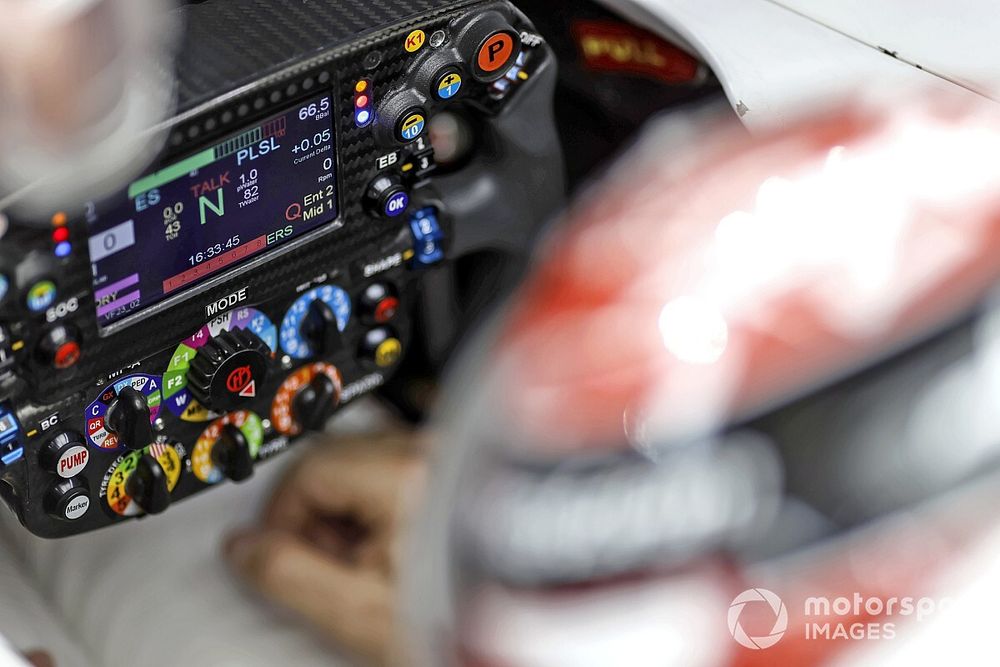
A Formula 1 steering wheel is far more than a device used to turn the car. It is a high-tech command center that allows drivers to control energy deployment, brake balance, differential settings, communication, and countless performance parameters in real time. Understanding how it works reveals how modern racing is as much about system management as it is about driving skill.
Introduction: The Steering Wheel Is the Driver’s Office
If you look inside a Formula 1 cockpit, the first thing you notice is the steering wheel. It is covered in switches, dials, LEDs, and screens that make it look closer to an aircraft control panel than a car component.
New fans often ask:
How can a driver possibly manage all of that while racing at 300 km/h?
The answer is simple: modern F1 drivers are elite multitaskers. They constantly adjust settings to extract performance, protect the car, and respond to strategy calls.
The wheel is where human input meets complex engineering.
It allows drivers to:
- Change power delivery
- Control hybrid energy
- Adjust braking behavior
- Tune cornering balance
- Communicate with engineers
- Manage failures
- Optimize starts and pit stops
Without this interface, modern F1 cars would be impossible to operate efficiently.
Why F1 Steering Wheels Are So Complex
In older eras, drivers mainly worried about shifting gears and turning the car. Today, regulations, hybrid systems, and tire sensitivity demand constant adjustments.
Every lap presents different challenges.
Drivers must react to:
- Tire wear
- Fuel targets
- Battery state
- Weather
- Traffic
- Safety cars
- Reliability warnings
Because of this, the steering wheel has become the central management tool.
The Screen: Information at a Glance
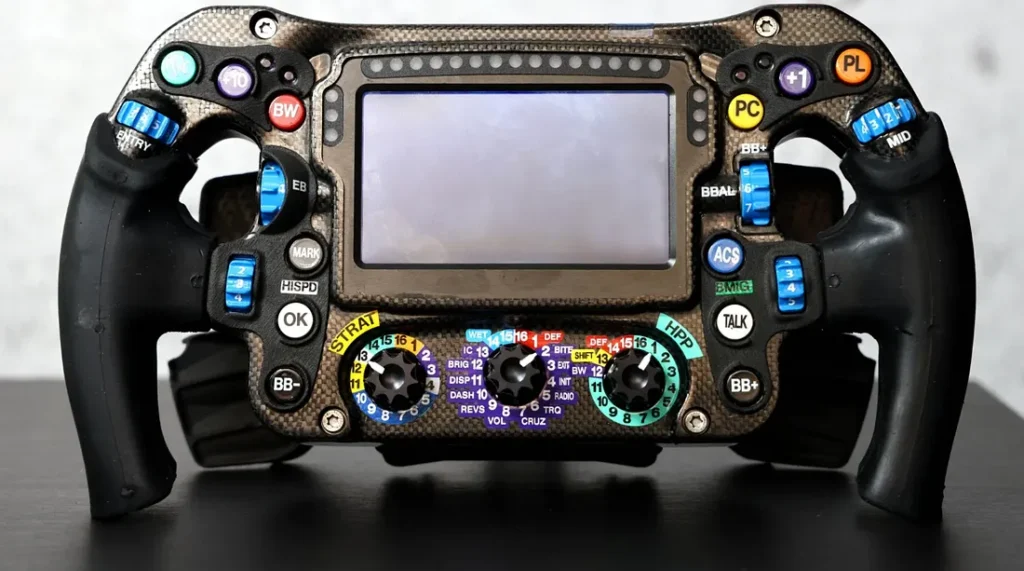
At the center of the wheel is a digital display. This is the driver’s real-time data hub.
It shows critical information that changes corner by corner.
Depending on the team and session, the screen may display:
- Gear
- Speed
- RPM
- Battery charge
- Delta time
- Warning messages
- Engine modes
- Lap number
Drivers cycle through pages depending on what they need to monitor.
Rotary Switches: The Famous Multi-Function Dials
Rotary switches are the colorful knobs that fans love spotting in onboard videos.
They allow rapid changes between pre-programmed settings.
Instead of adjusting tiny variables individually, drivers select profiles.
These rotaries often control:
- Energy deployment modes
- Engine mappings
- Differential settings
- Brake migration
- Torque delivery
- Recovery behavior
A single click can transform how the car behaves.
Engine Modes: More Than Just Power
Drivers cannot run maximum power all the time. Fuel limits, temperatures, and reliability require management.
Engine modes determine how aggressively the power unit operates.
They can influence:
- Fuel consumption
- Throttle response
- Electrical assistance
- Component stress
- Overtaking capability
You may hear engineers say:
“Mode push now.”
That instruction comes through the steering wheel.
ERS Deployment: Electric Boost Control
The hybrid system provides additional horsepower, but it must be used strategically.
Drivers select when to attack and when to save energy.
Deployment affects:
- Overtaking
- Defending
- Qualifying laps
- Straight-line speed
- Battery recharge cycles
Proper management can be worth several tenths per lap.
Brake Balance and Brake Migration
Drivers constantly adjust how braking force is distributed between front and rear wheels.
As fuel burns off and tires degrade, balance changes.
They tweak settings to maintain stability.
This can impact:
- Corner entry confidence
- Tire wear
- Lockups
- Rotation
- Consistency
Small changes make a huge difference.
Differential Settings: Controlling Rotation
The differential determines how rear wheels rotate relative to each other.
By adjusting it, drivers influence traction and turning behavior.
Different phases of the corner require different settings.
These adjustments help with:
- Entry stability
- Mid-corner rotation
- Exit traction
- Tire protection
It is a powerful handling tool.
Radio and Communication Buttons
Communication is essential in F1.
Drivers must speak to engineers without removing hands from the wheel.
Buttons allow them to:
- Activate radio
- Acknowledge instructions
- Report problems
- Confirm strategies
Clear communication can prevent disasters.
Pit Lane Functions
During pit stops, drivers switch to specific modes.
These protect mechanics and ensure smooth launches.
They may include:
- Pit speed limiter
- Clutch bite point
- Start procedures
- Launch settings
Execution must be perfect.
LEDs: Silent Guidance at 300 km/h
Lights on top of the steering wheel guide drivers without distraction.
They provide visual cues such as:
- Optimal shift points
- Flag warnings
- Pit entry alerts
- System failures
This allows instant reactions.
Customization: Built for Each Driver
Even teammates have different preferences.
Button placement, labeling, and programming are tailored.
Drivers work closely with engineers to refine layouts.
Personalization improves:
- Reaction time
- Comfort
- Accuracy
- Confidence
It becomes an extension of the driver.
How Drivers Learn to Use It
Before racing, drivers practice scenarios in simulators.
They memorize switch locations and procedures until they become instinctive.
Training includes:
- Failure drills
- Mode changes
- Race simulations
- Strategy rehearsals
By race day, operations feel automatic.
How Much Does an F1 Steering Wheel Cost?
Despite its small size, it is incredibly valuable.
Estimates suggest prices can reach tens of thousands of dollars due to electronics, materials, and development.
They are built from:
- Carbon fiber
- Custom wiring
- Advanced displays
- High-grade switches
It is one of the most specialized tools in motorsport.
Why Fans Love Steering Wheel Footage
Onboards reveal the hidden complexity of driving.
You can suddenly see how active drivers are, constantly making adjustments.
It highlights:
- Intelligence
- Workload
- Precision
- Mental capacity
It changes your appreciation of talent.
The Future of Steering Wheels
As hybrid systems evolve, interfaces will adapt.
We may see:
- Simplified layouts
- More automation
- Different energy controls
- New safety features
But drivers will always need command.
Final Thoughts
The Formula 1 steering wheel represents the fusion of human ability and advanced engineering. It transforms drivers into system managers, strategists, and technicians while they race at extreme speeds. Once you understand what those buttons and dials do, onboard footage becomes a masterclass in multitasking and precision.
Because drivers must control engine modes, hybrid systems, braking settings, communication, and strategy adjustments without taking their hands off the wheel.
Yes. Adjustments are constant and depend on tire condition, fuel level, traffic, and race plans.
An F1 steering wheel is extremely complex and can cost tens of thousands of dollars. It includes custom electronics, rotary switches, displays, and quick-release mechanisms designed specifically for each team.